Lilac Agriculture Closes Oversubscribed $2.3 Million Series Seed to Advance Next-Generation Rhizobium Inoculants for Pulse Growers
FARGO, N.D. — September 22, 2026 — Lilac Agriculture, a company bringing modern biological innovation to rhizobial strains farmers already rely on, today announced the close of an oversubscribed $2.3 million Series Seed financing. Innova led the round, which was targeted at $1.5 million and closed more than 50 percent above that figure. 701 Fund, Ag Ventures Alliance, Evergreen Climate Innovations, North Dakota Development Fund, Pathway Ventures, Tall Grass Ventures, and others also participated.
“This is Innova’s first investment in agricultural biologicals, and we didn’t make it lightly - we’ve looked hard at this category. We like that Lilac brings biological innovation to strains farmers already know and use, applying modern science in a practical way that doesn’t ask farmers to take on unproven risk. That, paired with a product already in growers’ hands and a platform with a credible path beyond pulses into other row crops, is exactly the kind of business we wanted to back,” said Dean Didato, Partner at Innova.
Peas, lentils, and dry beans fix their own nitrogen through a symbiosis with rhizobia, the soil bacteria that colonize their roots, and inoculating seed with those bacteria each spring is standard practice for pulse growers. The persistent challenge is competitiveness: native rhizobial populations already established in the soil often out-compete the strains in the purchased inoculant for nodule occupancy, resulting in limited and inconsistent yield benefit.
Lilac’s Guided Adaptation platform is built to optimize two traits at once - nitrogen-fixing efficiency and competitiveness. Applying plant-breeding logic to the microbe, Lilac starts with a broad diversity of rhizobial strains licensed on an exclusive basis from North Dakota State University and systematically improves them for the specific soils where they’ll be used. An elite strain that fixes more nitrogen and holds the nodule against native competition can support higher yield potential and reduce reliance on costly synthetic fertilizer. Lilac is starting in pulses, but the same platform is designed to extend to other crops, including row crops, over time.
“A better strain doesn’t help a grower if it can’t win the nodule in their own soil - that’s the gap we built Lilac to close,” said Dr. Natalie DiNicola, CEO of Lilac Agriculture. “Growers have relied on inoculants for generations, but rarely with real visibility into how they’re performing in their own fields. This round funds our expanded field trial and R&D pipeline, gets PL11 into more farmers’ hands across the region, and supports preparation for the Canadian market.”
“Having grown up as a farmer, the black-box claims in this category always frustrated me - you put an inoculant in the ground and just have to trust that it works. As a scientist, I want to fix that. There’s a huge amount of untapped variation in rhizobial bacteria that’s gone largely unexplored since most commercial strains were selected decades ago. Adapting strains to the crop and soil they’ll actually encounter, and measuring nodulation that happens in the field, is how we aim to deliver the efficacy and consistency growers are asking for,” said Dr. Barney Geddes, Chief Scientific Officer at Lilac Agriculture, who grew up farming before building his career as a global rhizobium expert with an extensive lab at NDSU.
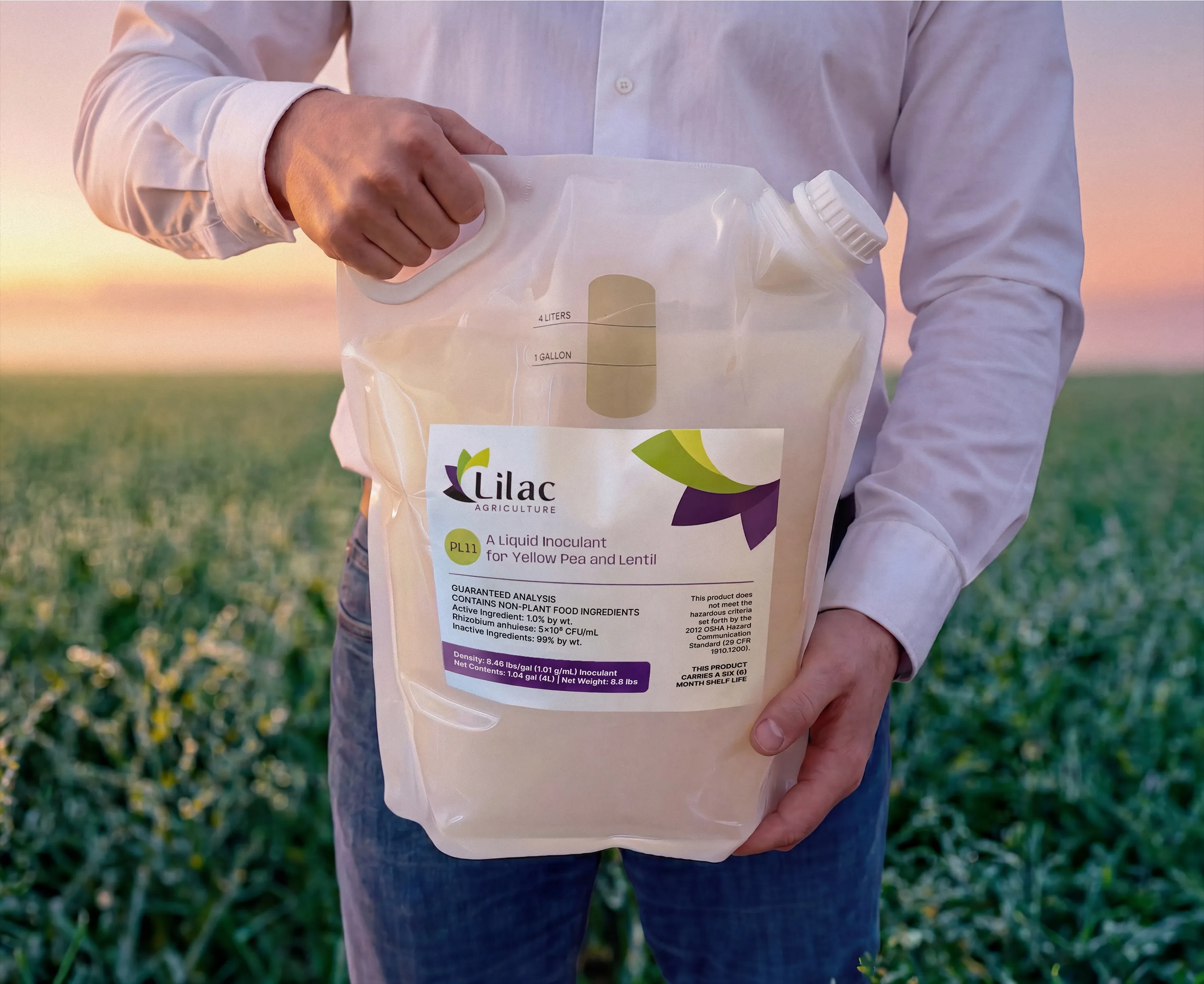
Lilac’s lead product, PL11, is already on the ground with pea and lentil growers across the Northern Plains. Early trial results have shown strong strain colonization at multiple sites, and expanded field trials are underway to validate performance more broadly ahead of the next commercial season. Registration is also underway for the Canadian market, as Canada is the world’s largest producer and exporter of both peas and lentils.
About Lilac Agriculture
Lilac Agriculture is applying modern biological innovation to deliver the next generation of rhizobium inoculants. Founded by a farmer-turned-scientist and built on research developed at North Dakota State University, Lilac’s Guided Adaptation platform selects and adapts rhizobial strains to fix more nitrogen and outcompete native soil populations in the fields where they’re actually used. The company is starting with peas, lentils, and dry beans across the Northern Plains, with a platform designed to extend to other row crops over time. Lilac is headquartered in Fargo, North Dakota. Learn more at www.lilac.ag.
About Innova
Innova is a venture capital firm focused on empowering early-stage startups that are defining the future of agriculture through automation, digitization, sustainability, and operational efficiencies. Innova partners with visionary entrepreneurs to bring groundbreaking solutions to the agricultural sector, fostering a more efficient and sustainable farming future. www.innova.ag.
Media Contact
Ready to outcompete?